How to wash and store cotton and silk sarees
A saree rarely dies of old age. It goes into water that is too hot, dries in direct sun, or sits folded on the same crease for two years. These are the habits that keep the cottons and silks in the boutique looking the way they did on the first wear.
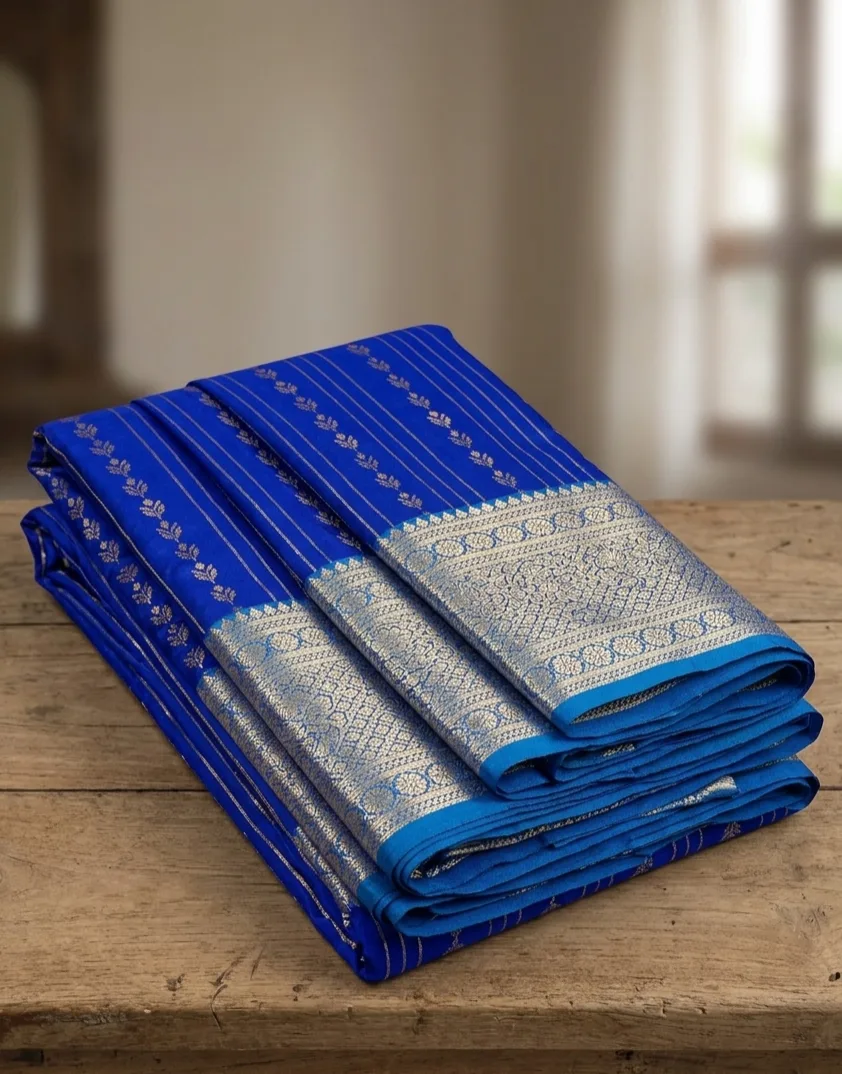
Start with the label
Not every saree is a hand wash. Read the label before anything else and, if it says dry clean only, believe it. When in doubt, an everyday cotton can take a gentle hand wash; a silk with a zari border is the one to send to the cleaner.
Everyday cotton
Wash new cottons separately for the first two or three washes. Handloom and naturally dyed cotton bleeds, and one red saree can tint a whole bucket.
Use cold water and a mild detergent. Work on the stain rather than scrubbing the whole saree, and keep the brush off the body of the fabric.
Rinse until the water runs clear. Soap left in the weave dulls the colour over time.
Cotton silk and soft silk
These sit between the two. A gentle hand wash in cold water is usually fine, but do not soak them, do not wring them, and do not leave them sitting wet in a bucket.
Roll the saree in a towel to take out the water, then dry it flat or on a wide hanger in the shade.
Pure silk and zari
Silk is weaker when it is wet. If you wash it at all, use cold water, a little mild soap and no twisting.
The zari is the fragile part. Do not soak it, do not scrub it, and do not wring the border. For a wedding saree or an heirloom, dry cleaning is the safer habit.
Drying
Shade, always. Direct sun fades colour, can yellow a white cotton, and makes silk brittle over the years.
Hang cottons straight from the rinse so the weight of the water pulls out the creases. Dry silk flat and away from the window, with the zari spread out rather than bunched.
Ironing
Press cotton on the reverse while it is still slightly damp, or use the steam setting and a hot iron with a light hand.
For silk, use the lowest heat, press on the reverse, and put a thin cotton cloth between the iron and the zari. Never leave the iron resting on the border.
Storing
Fold silk in cotton or muslin. Plastic sheeting traps moisture and can discolour the fabric over the years.
Refold along different lines every few months, so the same crease does not weaken and split. Do not hang a silk saree for months at a time; the weight of the fall pulls the weave out of shape.
Skip naphthalene balls next to silk. Neem leaves or a silica sachet do the same job without the smell or the yellowing. Air the cupboard on dry days and take the silks out now and then.
Stains, quickly
Blot, do not rub. Cold water first, then a little mild soap, working from the outside of the stain inwards.
Oil needs a drop of dish soap or soapnut powder before the wash. Turmeric and coffee need cold water and patience, not hot water, which sets them.
If it is a silk you care about, stop and take it to the cleaner rather than trying one more thing at home.
Buying a saree you can care for
Ask how the saree should be washed before you buy it, and ask whether the colour is likely to bleed. A shop that cannot answer that is telling you something.
At Blush and Bloom, orders happen on WhatsApp, so you can ask about the fabric and the border before you decide. The care is your part, but the information should come with the saree.
Written by Amaladevi, who runs Her Happy Journey from Madurai. Trips are planned with the women who are going; no dates or prices are published in advance.